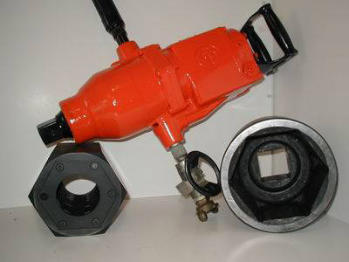
Rusted bolts are a different challenge from stripped screws — the problem isn’t the drive head, it’s the bond between the fastener threads and the surrounding material. Corrosion creates a mechanical and sometimes chemical bond that simple torque often can’t overcome. The professional’s approach uses a specific sequence that maximizes extraction success while minimizing damage to the surrounding substrate.
Before applying any torque to a rusted fastener, apply a quality penetrating oil (PB Blaster, Kroil, WD-40 Specialist Penetrant — not standard WD-40) and give it real time to work. The professional approach: apply penetrating oil and wait 30 minutes minimum. Apply a second coat and wait overnight when schedule permits. On severely corroded fasteners, multiple applications over multiple days dramatically improve extraction success rates.
Apply the oil at the fastener-material interface, not just on top of the head. You want the oil to wick into the thread bond — gravity and capillary action help here. Applying from underneath when possible gives better penetration.
Thermal cycling — heating and cooling the fastener — expands and contracts the metal, breaking the corrosion bond. A propane torch applied to the bolt (not the surrounding material, particularly around wood or painted surfaces) for 30–60 seconds, followed by a penetrating oil application while still warm, is one of the most effective approaches for severely corroded outdoor fasteners.
When heat is appropriate: structural steel, plumbing fixtures, equipment mounting bolts. When heat is absolutely not appropriate: anywhere near wood framing, drywall, fuel lines, or any painted surface you care about. Always have fire suppression available when using a torch on a job site.
Before trying to turn a rusted bolt, try striking it. A sharp impact directly along the bolt axis (an impact driver set to drive rather than extract, or a center punch and hammer) can break the corrosion bond that rotational torque alone can’t overcome. This works best on bolts where the corrosion is at the thread interface rather than throughout the shank.
If the bolt head is intact, a proper-sized 6-point socket provides far better grip than 12-point on a rusted head. Use a breaker bar rather than a ratchet for maximum torque control. Apply slow, steady pressure — not sharp impacts — to avoid snapping the bolt off at the shank.
If the bolt head is damaged (rusted beyond the socket biting), this is where a quality screw/bolt extractor becomes essential. The StudRemover Pro’s extraction bits cut into the fastener body itself, bypassing the damaged head entirely. The reverse-spiral design increases its grip as extraction force increases — meaning the more resistance the rusted bolt provides, the better the bit holds. Apply penetrating oil to the fastener first, then extract with the bit at full torque in reverse mode.
If a fastener is truly immovable, drilling it out is the last resort. Drill through the center of the bolt, incrementally increasing drill size, until the threads can be cleaned up or the fastener core collapses enough to be removed. This destroys the bolt and often requires re-tapping the threads — but it removes the fastener without destroying the surrounding structure.